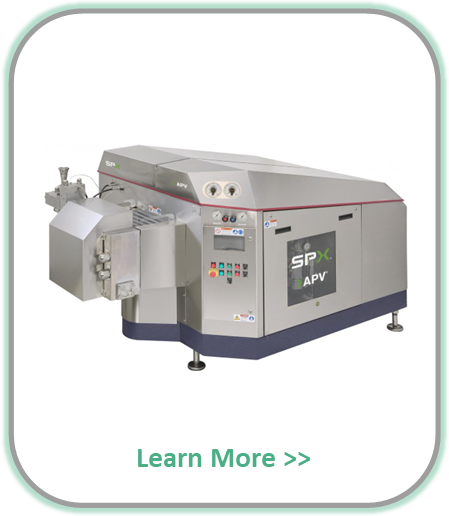
Homogenizers
High-pressure homogenization support for emulsions, dispersions, particle-size reduction, texture control, and sanitary production lines.
View homogenizers →Read homogenizer history →Homogenizing, heat transfer, high-shear mixing, UHT processing, scraped-surface exchange, colloid milling and related systems are not commodity decisions. Triplex helps connect the application requirements with the right equipment path.
Quick answer: Start process equipment selection with the product and process result, not the equipment photo. The right path depends on viscosity, particulates, target texture or particle size, heating/cooling duty, throughput, pressure, cleaning method, utilities, controls, documentation, and what the existing line is failing to do.
| Application signal | Likely direction | Triplex next step |
|---|---|---|
| Texture, emulsion, dispersion, or particle-size goal | Homogenizer, colloid mill, or shear pump | Define the target result, pass count, pressure, flow, and sanitation needs. |
| Heating/cooling, fouling, crystallization, or viscosity challenge | Plate, tubular, or scraped-surface heat exchange | Review product behavior at temperature, utilities, pressure drop, and cleaning. |
| Continuous process or packaged sanitary system need | Process system review | Confirm throughput, controls, footprint, cleaning, documentation, and service access. |
This page collects the specialty equipment families Triplex supports beyond core pumps, valves, hose, fittings and gaskets.
Use it as a starting point for equipment conversations involving heat transfer, particle reduction, emulsification, high-pressure homogenization, continuous processing, and sanitary system support. If the application is complex, we will usually ask for the product, temperature, flow, pressure, cleaning, and current equipment details before recommending a direction.
High-pressure homogenization support for emulsions, dispersions, particle-size reduction, texture control, and sanitary production lines.
View homogenizers →Read homogenizer history →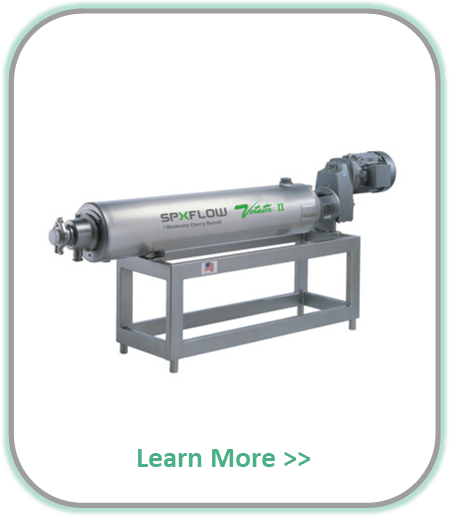
Scraped-surface heat exchange for viscous, sticky, crystallizing, fouling, or temperature-sensitive products where standard heat exchange struggles.
View Votator equipment →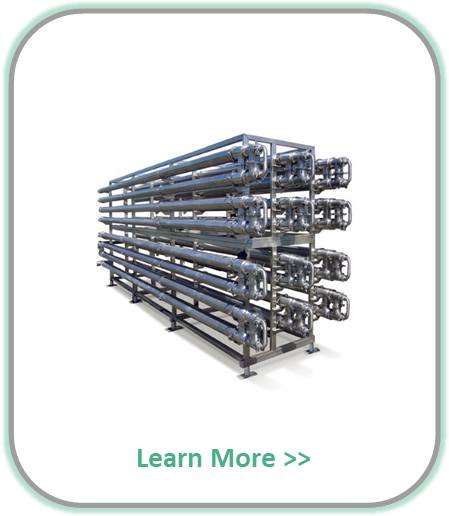
Tubular heat exchanger paths for sanitary process heating and cooling applications that need robust product handling.
View tubular HEX →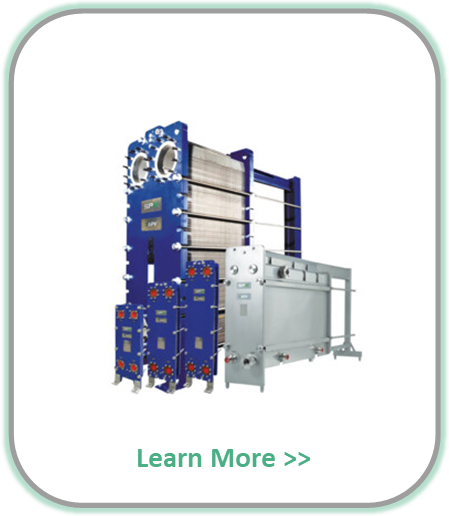
Plate heat exchange support for efficient heating, cooling, regeneration, and utility-driven process requirements.
View plate heat exchange →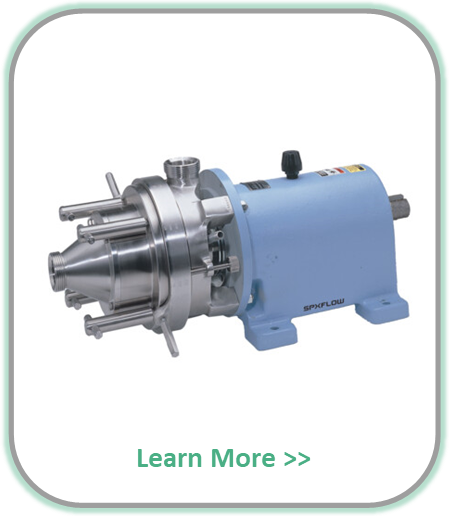
Inline milling and particle-size reduction support for emulsions, suspensions, sauces, creams, and other process products.
View colloid mills →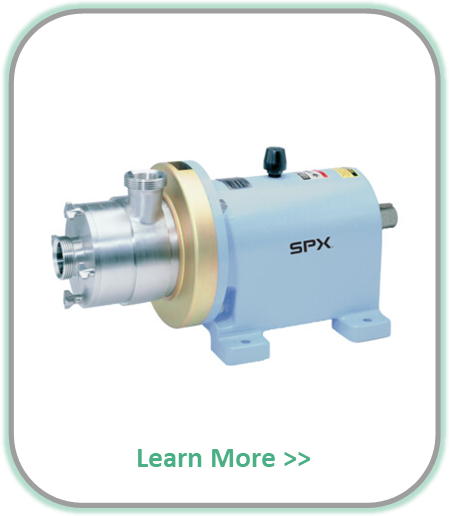
High-shear inline mixing support for blending, dispersion, emulsification, and controlled product texture development.
View shear pumps →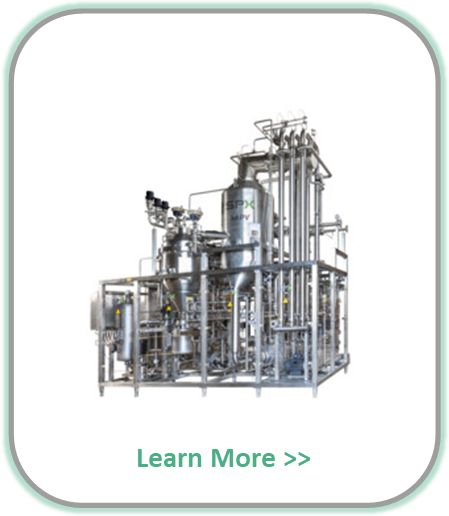
Ultra-high-temperature processing support where heat treatment, hold time, cleanability, and sanitary design all have to work together.
View UHT systems →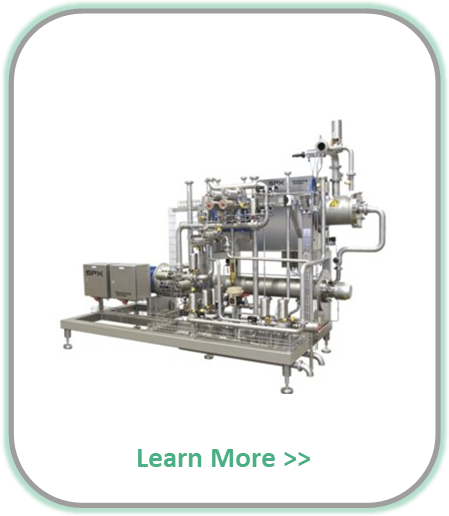
Process-system support for shortening and fat-based applications involving controlled cooling, crystallization, and product consistency.
View shortening systems →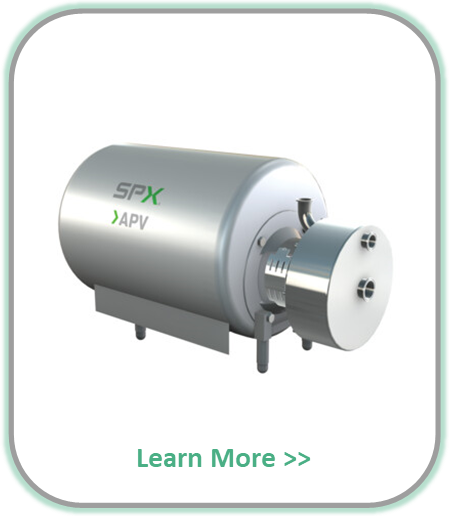
Specialty processing support for applications where cavitation-based mixing, heating, or product conditioning may be part of the solution.
View cavitator →Process equipment decisions depend on more than the equipment category. The fastest path is to share the application details up front.
Triplex supports process equipment conversations across food, beverage, dairy, pharma, biotech, brewery, chemical, and personal care applications. Our facility audits and site surveys help document installed equipment, gaps, and follow-up opportunities across those same process areas.
Triplex facility audits and site surveys help connect what is happening across pumps, valves, heat exchange, homogenization, utilities, sanitation, and production goals.
We help identify bottlenecks, aging equipment, service risks, standardization opportunities, and quote-ready next steps — so the next process discussion starts from the installed reality, not just a catalog category.
These answers mirror the structured FAQ layer so buyers and search systems see the same guidance.
Start with product, target result, flow or batch size, temperature, viscosity, particulates, pressure, cleaning method, utilities, current equipment, and what problem you are trying to solve.
Most process equipment decisions require context when product quality, texture, heat transfer, sanitation, controls, uptime, or scale-up are involved. The process result drives the equipment path.
Yes. Triplex can help route the request toward homogenization, heat exchange, milling, shear, UHT, Votator, or another process equipment path based on the application details.
Send the product, duty conditions, current equipment, and what you are trying to solve. We will help route the next step.
Tell us what you are trying to move, control, heat, cool or replace. We will help narrow the path.