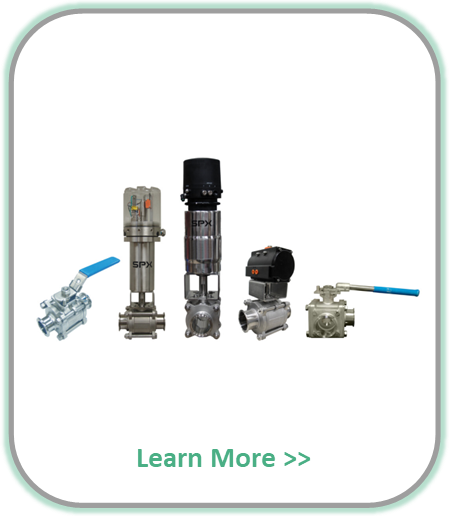
Waukesha 300 Series Ball Valves
Full-port sanitary ball valves with straight-through flow, low pressure drop, manual or pneumatic operation, and production/CIP-friendly serviceability.
View product →Ball valves are a practical answer when the application needs simple quarter-turn operation, straight-through flow, low pressure drop, and sanitary construction. Triplex supports Waukesha, Dixon, and QSM ball valve families for food, beverage, dairy, chemical, biotech, and pharmaceutical process lines.
Full-port sanitary ball valves with straight-through flow, low pressure drop, manual or pneumatic operation, and production/CIP-friendly serviceability.
View product →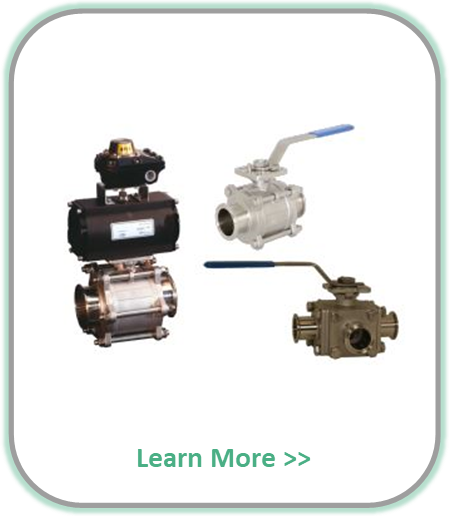
Encapsulated 2-way and 3-way sanitary ball valves for high-purity fluid handling, compact installations, and low-pressure-drop flow control.
View product →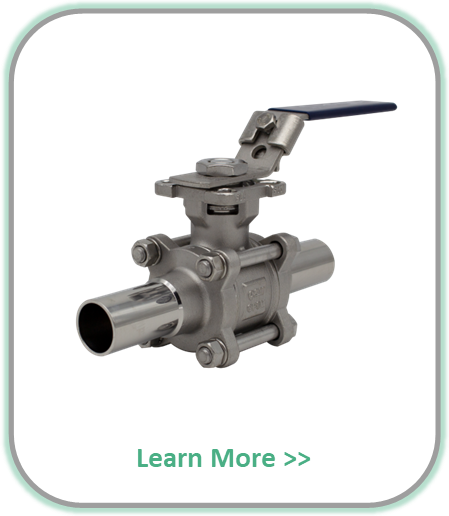
A broad Tru-Flo lineup covering direct-mount, extended-weld-end, 3-way, multiport, high-purity, and V-port flow-control designs.
View product →The right sanitary ball valve depends on what you are controlling, how often it cycles, what needs to be cleaned, and whether the valve is isolating, diverting, or throttling.
Use this page as the family map. The Waukesha 300 Series, Dixon BV2C, and QSM Tru-Flo product pages below split the lineup by application style and available documentation.
Ball valves are often selected quickly. The misses usually come from overlooking seat material, cavity filling, automation, or port pattern.
Ball valves make sense when you want a robust, low-restriction flow path. For fine control, pressure relief, aseptic service, or diaphragm-style cleanability requirements, another valve family may be the better answer.
Send the line size, connection, product, temperature, pressure, and whether you need manual, actuated, divert, or flow-control service.
Tell us what you are trying to move, control, heat, cool or replace. We will help narrow the path.