AODD pumps for sanitary transfer, solids, and container evacuation.
Graco SaniForce AODD equipment gives Triplex customers options for food-grade transfer, high-sanitation duties, large particles, viscous products, and unloading drums, pails, bins, and totes.
Where this Graco pump belongs.
Triplex helps compare pneumatic diaphragm, electric diaphragm, high-sanitation, large-particle, and container-evacuation options around the real product and process conditions.
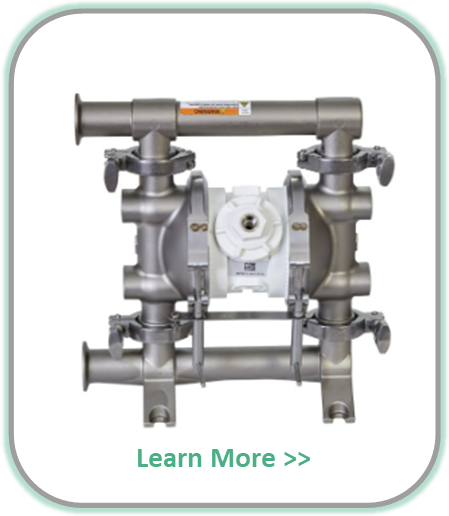 Food grade
FG Series AODD
Food-grade pneumatic diaphragm pumps for sanitary transfer.
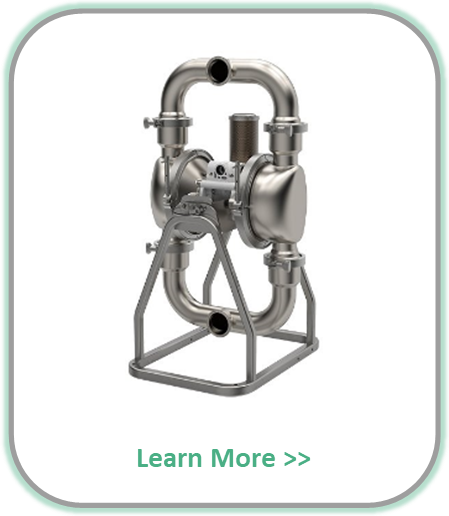 High sanitation
HS Series
High-sanitation diaphragm pumps for stringent cleaning requirements.
3A3A pumps
3A-focused sanitary diaphragm pump configurations.
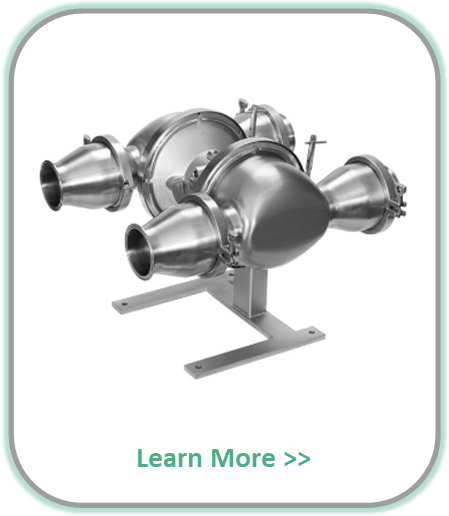 Large particle
LP pumps
Designed for products with larger solids or particulates.
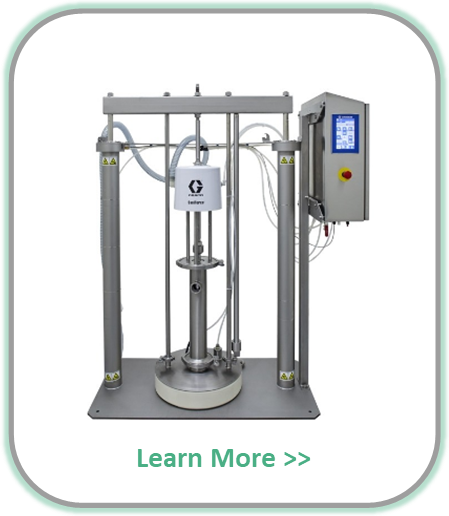 Unloading
Drum unloaders
Evacuate higher-viscosity product from drums.
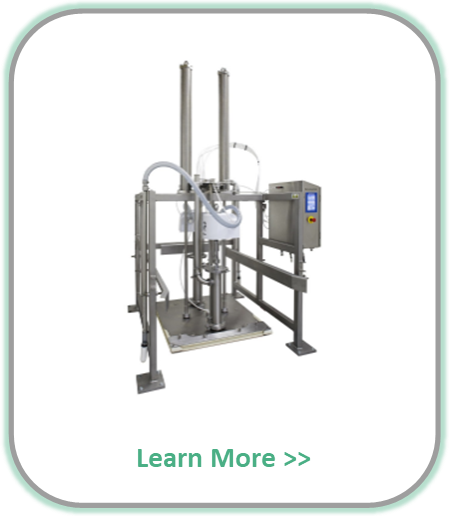 Unloading
Bin evacuation systems
Evacuate products from bins/totes with less manual handling.
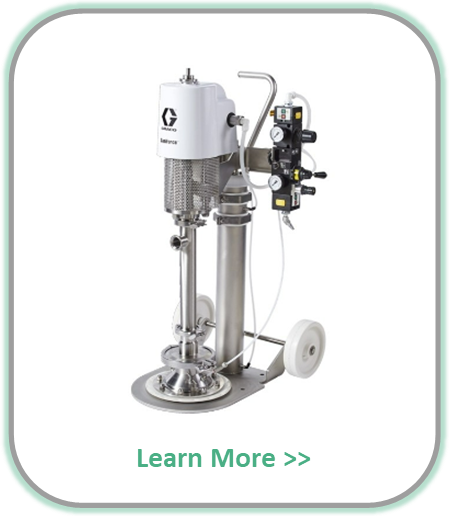 Unloading
Pail unloaders
Container evacuation for 5/7-gallon pails.
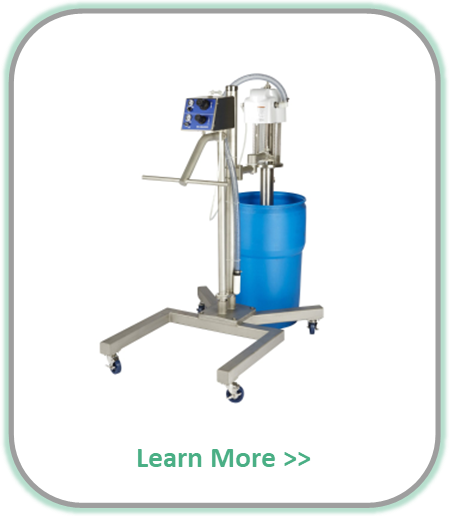 Handling
Elevators
Lift/lower pumps into containers for safer handling.
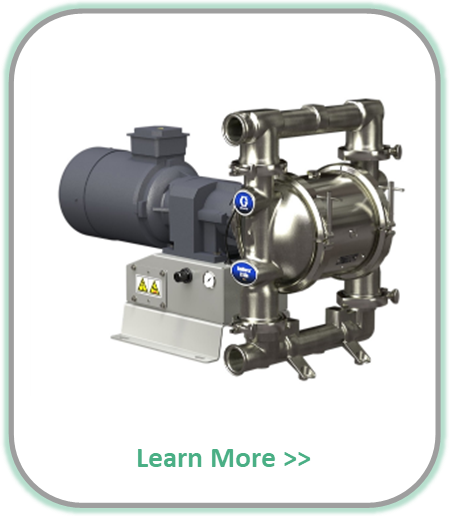 Electric
EODD pumps
Electric diaphragm options when air use or control is the issue.
When should you use a sanitary AODD pump?
Quick answer: Use a sanitary AODD pump when you need simple, air-driven transfer for viscous products, solids, intermittent duty, or container evacuation. If compressed air cost, control, or pulsation are concerns, compare EODD; if continuous sanitary transfer is the goal, compare centrifugal, rotary lobe, or twin screw.
| Application signal | Likely direction | Triplex next step |
|---|---|---|
| Viscous product, solids, intermittent transfer, or drum/pail/bin unloading | Sanitary AODD or unloading system | Review Graco SaniForce pump and container-evacuation options. |
| Air cost, control, noise, or pulsation is the problem | EODD pump | Compare electric diaphragm options before defaulting to air. |
| Continuous clean liquid transfer | Centrifugal or PD pump | Compare centrifugal, rotary lobe, or twin screw based on viscosity and duty cycle. |
AODD or EODD: when to compare both.
A sanitary AODD pump is often a good fit for straightforward transfer, intermittent operation, portable service, viscous products, container evacuation, and some particulate-bearing products. Electric diaphragm pumps should be considered when compressed-air cost, noise, control, pulsation, or repeatability are becoming problems — but the final choice still depends on the product, duty cycle, cleaning method, controls, electrical classification, and plant standards.
Diaphragm pumps are pulsating positive-displacement pumps. If the process needs smooth low-pulsation flow, accurate dosing, or tight flow control, Triplex should review the application before treating AODD as the default.
| Application signal | Usually compare first | Why |
|---|---|---|
| Intermittent sanitary transfer | AODD | Simple air-driven operation can be a practical fit. |
| Drum, pail, tote, or bin unloading | AODD or unloading system | Container geometry, viscosity, and leftover product matter. |
| Air cost, noise, pulsation, or control is a concern | EODD | Electric diaphragm options may improve control and reduce air dependence, but site duty must be checked. |
| Continuous production transfer | Application review | Duty cycle and product behavior may point toward EODD, rotary lobe/ECP, twin screw, or centrifugal. |
| Solids or particulates | Application review | Particle size, firmness, concentration, check style, speed, diaphragm material, and acceptable product damage matter. |
Sometimes the pump is not the whole answer.
For drums, pails, totes, and bins, the application may need more than a diaphragm pump. Product viscosity, container geometry, operator handling, sanitation, duty cycle, and leftover product all affect whether a drum unloader, pail unloader, elevator, bin evacuation system, follower plate, or other handling support belongs in the quote.
Graco SaniForce categories should be treated as configurations that require model/configuration verification — not a simple good-better-best ladder. Confirm wetted materials, cleaning method, 3-A configuration where required, particle size, check style, and whether the need is container unloading, downstream process transfer, or both.
What to verify before quoting.
| Selection point | Why it matters | Triplex note |
|---|---|---|
| Product and viscosity | Diaphragm and unloading equipment selection changes quickly with product behavior. | Send temperature, viscosity range, and whether chunks/solids are present. |
| Air vs electric | AODD simplicity and EODD energy/control benefits solve different problems. | Compare utilities, controls, pulsation tolerance, and sanitation requirements. |
| Cleaning and sanitation | Food-grade, high-sanitation, 3A, and container-evacuation systems have different cleaning expectations. | Confirm CIP/COP, disassembly, drainability, and plant standards. |
Documents and tools.
Use these Graco resources for diaphragm pump selection and service conversations. For broader installed-base review, Triplex facility audits and site surveys help identify pump locations, utility choices, sanitation requirements, and spare-parts needs.
AODD pumps tend to multiply. The audit helps make sense of them.
Triplex audits and site surveys help identify where AODD still makes sense, where electric diaphragm pumps may reduce air cost, and where another pump style may solve the application better.
We also look for diaphragm material issues, sanitation concerns, spare-parts gaps, and problem applications that deserve a closer review.
Related Graco pump pages.
Plain-English selection answers.
These answers mirror the structured FAQ layer so buyers and search systems see the same guidance.
When is an AODD pump a good fit?
AODD pumps are often a good fit for sanitary transfer, intermittent duty, viscous products, container evacuation, and some particulate-bearing products where simple air-driven operation is useful.
When should I consider EODD instead of AODD?
Consider EODD when compressed air cost, controls, noise, pulsation, or repeatability are major concerns. EODD is not automatic; Triplex should review duty cycle, sanitation, product, utilities, controls, and plant standards around the actual duty.
What information does Triplex need to recommend a Graco SaniForce pump?
Send product, viscosity, solids or particulates, flow, discharge pressure, container type, air or electric preference, cleaning method, sanitation requirements, and current pump issues.
Need help choosing a Graco SaniForce pump?
Send product, viscosity, solids, flow, discharge pressure, container type, air/electric preference, cleaning method, and sanitation requirements.
Talk to Triplex