The full sanitary valve lineup, from CIP to bioprocess.
Diaphragm, seat, mix-proof, check, pressure relief, butterfly, ball, and sample — every sanitary valve family we carry, with manual and automated configurations across the brands that QA teams ask for by name.
Most of what we ship is 3-A certified or USP Class VI compliant. If you're specifying a valve for a CIP/SIP loop, a biopharm line, or a dairy mix-proof application, there's a good chance we have it on the shelf.
The hygienic core.
The three valve families that drive the most spec work on high-purity lines — diaphragm for bioprocess and chemistry, seat for throttling and routing, and mix-proof for dairy and beverage CIP-SIP isolation.
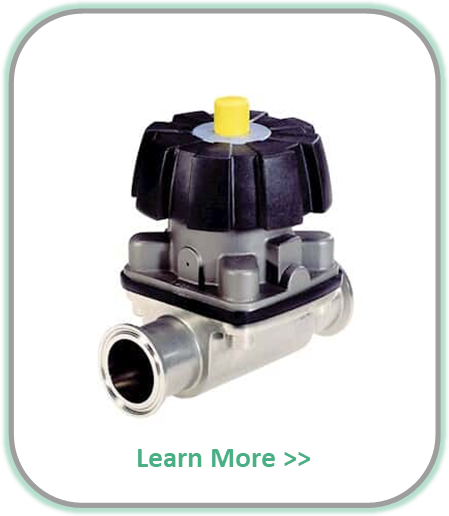
Diaphragm Valves
Weir and straight-through bodies for biopharm, ultra-pure water, and chemistry service. USP Class VI elastomers, PTFE-faced options, and ASME-BPE compliance on bioprocess lines.
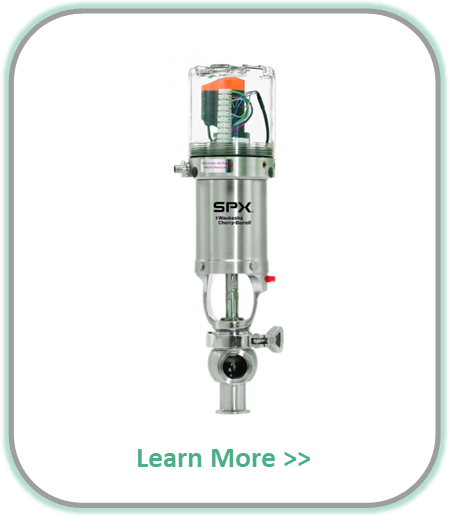
Seat Valves
Single-seat hygienic valves for routing, shut-off, and throttling duty. Pneumatic and manual actuation, T-port and L-port configurations, stem-sealed for clean process service.
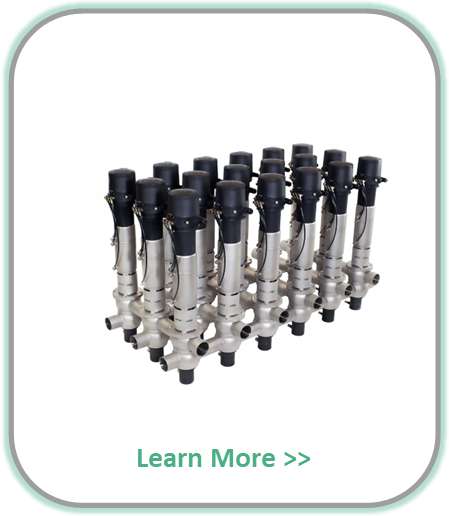
Mix-Proof Valves
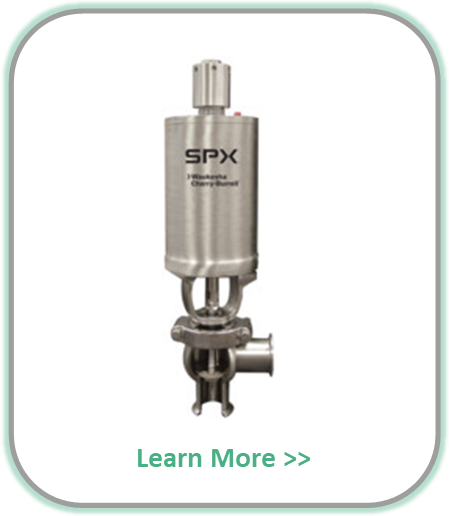
Double-seat mix-proof bodies with leakage chamber for simultaneous product and CIP flow. The workhorse of dairy, brewery, and beverage manifolds — zero cross-contamination by design.
Every valve we carry.
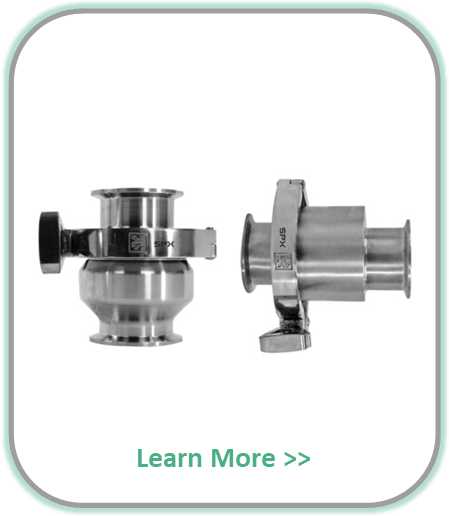
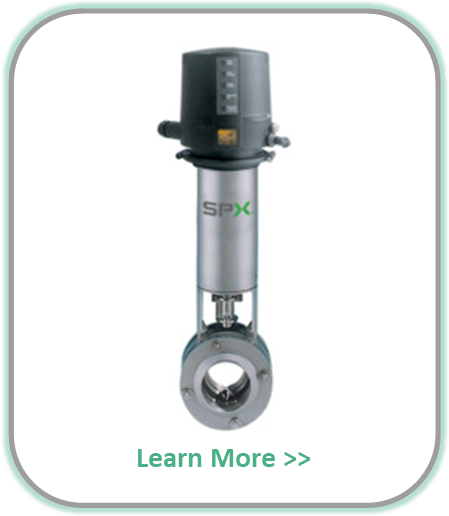
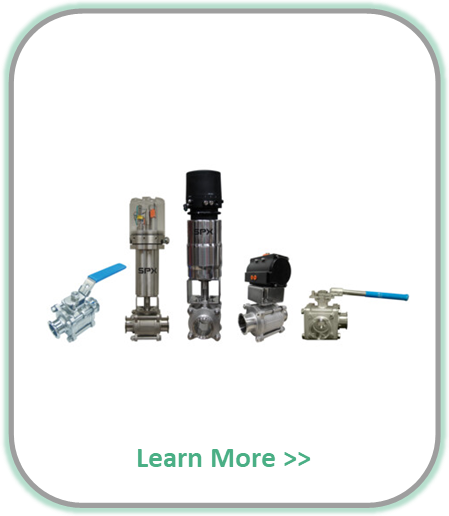
Every sanitary valve family we stock, organized by type. Click any tile to see configurations, sizes, actuation options, and brand detail on the dedicated product page.
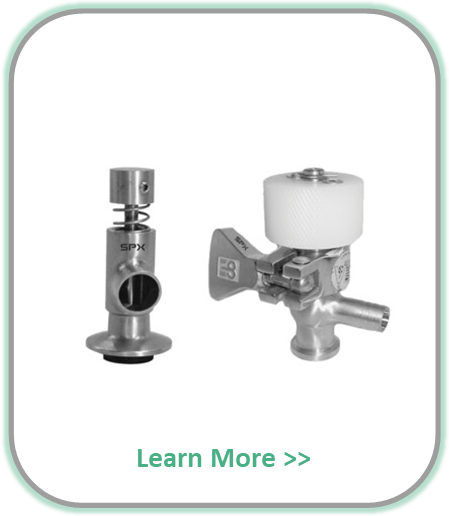
How should you choose a sanitary process valve?
Quick answer: Choose a sanitary process valve by starting with the duty: shutoff, routing, throttling, sampling, pressure relief, tank isolation, or CIP/SIP separation. Then verify cleanability, materials, actuation, documentation, and whether the application belongs with diaphragm, seat, mix-proof, check, relief, butterfly, ball, or sample valve families.
| Application signal | Likely direction | Triplex next step |
|---|---|---|
| Biopharm, high-purity, sampling, or cleanable dead-leg control | Diaphragm valve package | Review body geometry, diaphragm material, actuation, controls, and documentation together. |
| Dairy, beverage, routing, tank outlet, or CIP separation | Seat, mix-proof, or specialty sanitary valve | Verify cleanability, seat design, automation, and service access. |
| Basic isolation where cleanability still matters | Butterfly, ball, check, or relief valve | Confirm materials, pressure/temperature, certification, and spare-parts expectations. |
Which valve for which job.
A quick decision guide for the most common sanitary process duties. Not prescriptive — your application may want something else — but a useful starting point when you're narrowing the spec.
Crevice-free body, USP Class VI elastomers, and PTFE-faced options for ASME-BPE service.
Diaphragm View →Double-seat with leakage chamber prevents cross-contamination when CIP and product share manifolds.
Mix-Proof View →Single-seat hygienic bodies with T/L-port configurations for general process routing.
Seat Valve View →Workhorse on/off for sanitary lines where crevice-free isn't critical — fast actuation, low price.
Butterfly View →Ball-check or spring-loaded bodies prevent reverse flow on pump discharge and return lines.
Check View →Sanitary spring or air-loaded relief bodies protect tanks, HEX, and positive-displacement pump discharges.
Pressure Relief View →Aseptic sample bodies with steam-sterilization for inline QC draws without compromising batch integrity.
Sample View →Three-way ball bodies divert flow without the footprint of a seat-valve cluster.
Ball View →




Built for sanitary service.
Valve certifications your QA and validation teams want to see. The marks below cover the bulk of our hygienic valve lineup — line-level detail is on each product page.
3-A Symbol authorization across most sanitary valve bodies — dairy, beverage, and food lines.
USP Class VI elastomers (EPDM, silicone, PTFE) for biopharm diaphragm and seat bodies.
ASME-BPE compliant diaphragm bodies for high-purity bioprocess loops.
316L stainless standard across hygienic bodies, with super-alloys on request.
Where these valves run.
Five industries account for most of the valve work coming out of Schaumburg — and the valve family shifts based on what each floor actually needs.
Beverage
Mix-proof valves on brewery, distillery, and juice manifolds for CIP-SIP isolation.
BeveragePharmaceutical
Diaphragm and sample valves for USP Class VI and ASME-BPE biopharm loops.
PharmaceuticalPersonal Care
Butterfly and ball valves on cosmetics, lotion, and personal care formulation lines.
Personal CareData Center Cooling
Ball and butterfly valves for dielectric fluid and high-purity coolant handling.
Data Center CoolingA clearer valve plan starts with what is installed now.
Triplex valve audits and site surveys help identify installed valve types, actuation needs, diaphragm and seat material concerns, documentation gaps, and opportunities to standardize across a line or facility.
Whether the next step is replacement, automation, maintenance planning, or a shutdown parts list, the audit program gives the valve discussion a practical starting point.
Plain-English selection answers.
These answers mirror the structured FAQ layer so buyers and search systems see the same guidance.
What sanitary valve type should I start with?
Start with the valve duty. Diaphragm valves are common for high-purity and cleanable process points; seat and mix-proof valves are common for routing, tank, dairy, and beverage applications; check, relief, butterfly, ball, and sample valves solve more specific duties.
What information does Triplex need to recommend a valve?
Useful information includes product, temperature, pressure, cleaning method, valve size, end connections, duty, actuation preference, material requirements, certifications, controls, and any existing tag or part numbers.
Can Triplex help with complete valve assemblies?
Yes. Triplex can help review the full assembly including body, wetted materials, actuator or bonnet, controls, position feedback, documentation, spare parts, and replacement strategy.
Send the duty. We'll send the valve.
Tell us the process fluid, temperature, pressure, and CIP/SIP requirements — or just send the part number you're trying to replace. We'll confirm availability and get pricing back the same day.