Installed Base & Legacy Homogenizers
Many plants still run older Gaulin and Rannie machines. The useful first step is identifying the nameplate, liquid end, serial number, current symptoms, and parts requirement.
Where this fits in the homogenizer conversation.
Legacy Gaulin M / MC / MS, Rannie Blue Top, Gaulin/Rannie World lineage, and support availability by exact machine.
Product and result
Start with the product, current process issue, target particle/droplet behavior, texture, stability, temperature window, viscosity, and cleaning method.
Pressure and capacity together
Pressure and flow must be reviewed as a pair. A model's maximum capacity and maximum pressure should not be treated as simultaneous unless the current APV data supports that operating point.
Parts, controls, and service access
Liquid-end design, valve geometry, materials, controls, feed conditions, and access for maintenance all affect long-term operation.
Installed-base support starts with identifying exactly what is in the plant.
Before discussing parts, upgrades, or service, confirm the nameplate, serial number, liquid-end design, duty, symptoms, and what has already been replaced.


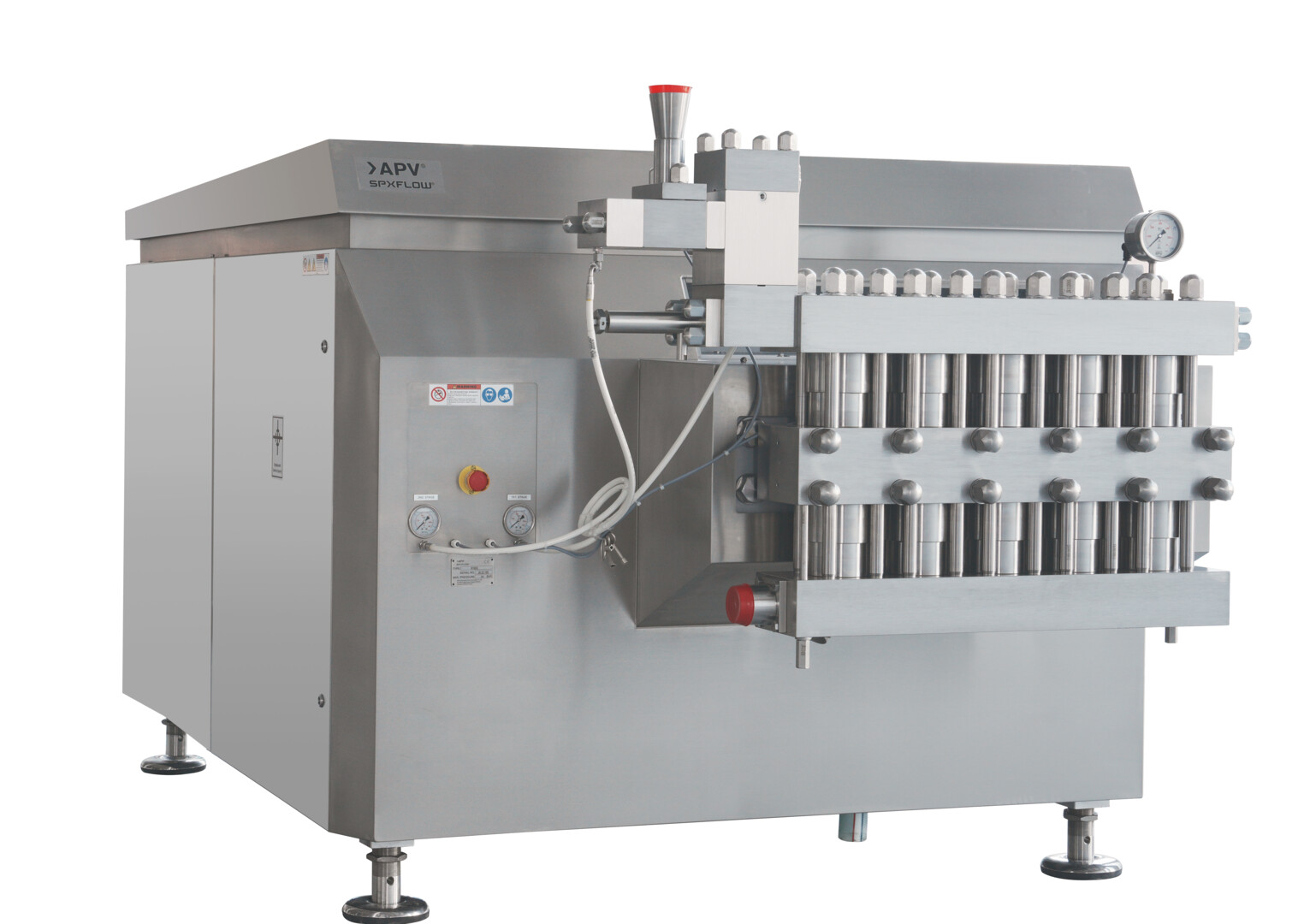
Selection is technical before it is transactional.
A classic APV Gaulin/Rannie-style homogenizer is a positive-displacement plunger pump with a homogenizing valve. The pump develops pressure; the result is created through the valve gap and depends on product behavior, stage count, pressure, temperature, feed quality, and valve configuration.
Useful related resources.
Need help narrowing the right path?
Send product, target result, temperature, viscosity, flow rate, pressure range, sanitation requirements, current equipment, and whether this is lab, pilot, production, parts, or service.
Talk to Triplex