Production & Process Homogenizers
APV Gaulin and Rannie production platforms are selected around throughput, pressure, liquid-end design, sanitation, controls, and service access — not a model number alone.
Where this fits in the homogenizer conversation.
T/Q series families, Gaulin mono-block and Rannie three-piece liquid-end positioning, valve selection, sanitary/aseptic options, and production sizing inputs.
Product and result
Start with the product, current process issue, target particle/droplet behavior, texture, stability, temperature window, viscosity, and cleaning method.
Pressure and capacity together
Pressure and flow must be reviewed as a pair. A model's maximum capacity and maximum pressure should not be treated as simultaneous unless the current APV data supports that operating point.
Parts, controls, and service access
Liquid-end design, valve geometry, materials, controls, feed conditions, and access for maintenance all affect long-term operation.
Production homogenizers should be reviewed by platform, duty point, and liquid-end configuration.
Use the equipment view to orient the technical conversation: plunger count, pressure/flow range, liquid-end style, controls, utilities, sanitation, and service access.
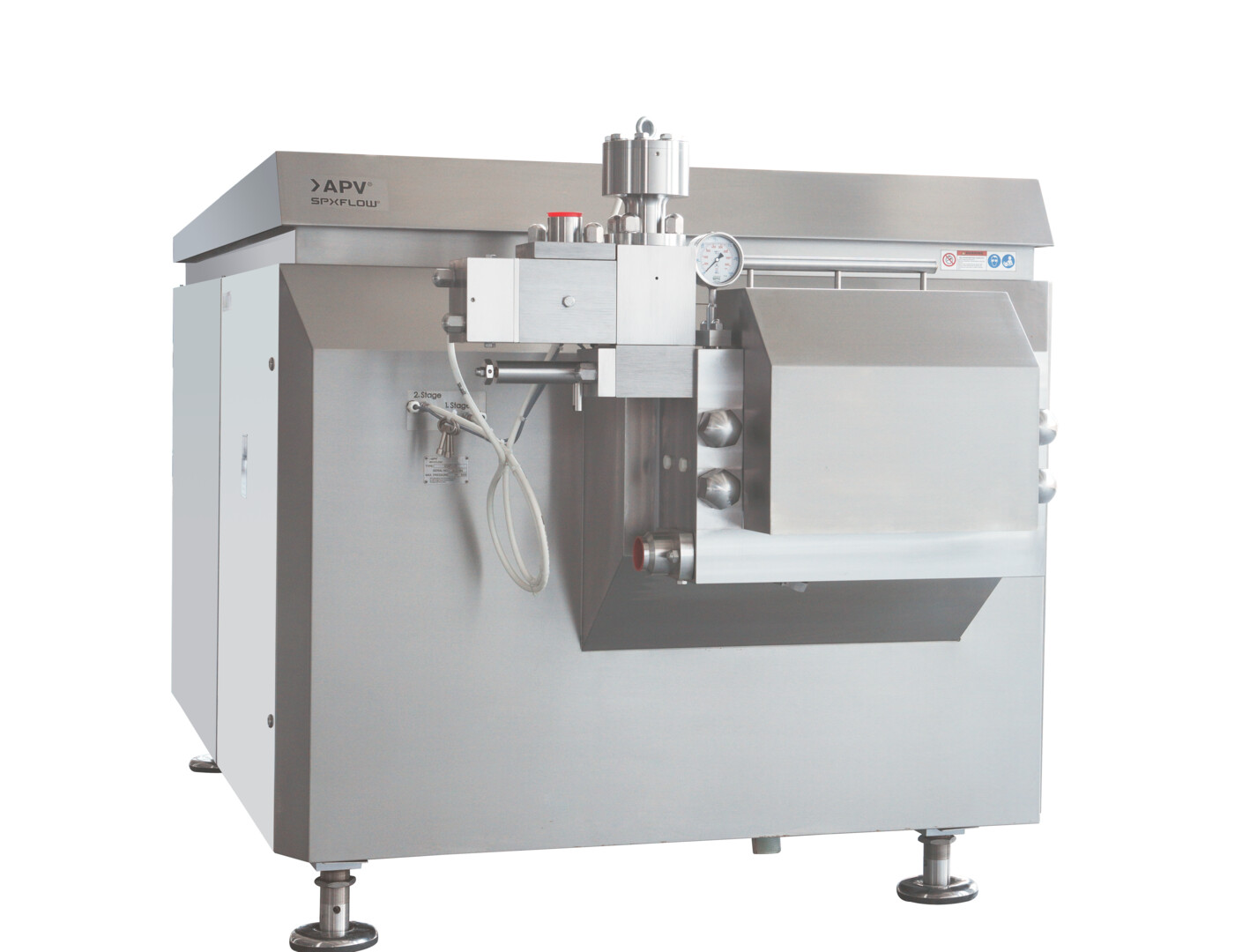


Rannie and Gaulin homogenizer animation
A concise visual reference for the main homogenizer components and operating principle.
Selection is technical before it is transactional.
A classic APV Gaulin/Rannie-style homogenizer is a positive-displacement plunger pump with a homogenizing valve. The pump develops pressure; the result is created through the valve gap and depends on product behavior, stage count, pressure, temperature, feed quality, and valve configuration.
Useful related resources.
Need help narrowing the right path?
Send product, target result, temperature, viscosity, flow rate, pressure range, sanitation requirements, current equipment, and whether this is lab, pilot, production, parts, or service.
Talk to Triplex